
Safety & quality
Two things that get talked about generically and then skipped specifically. Here is what we actually do, in enough detail that you can hold us to it.
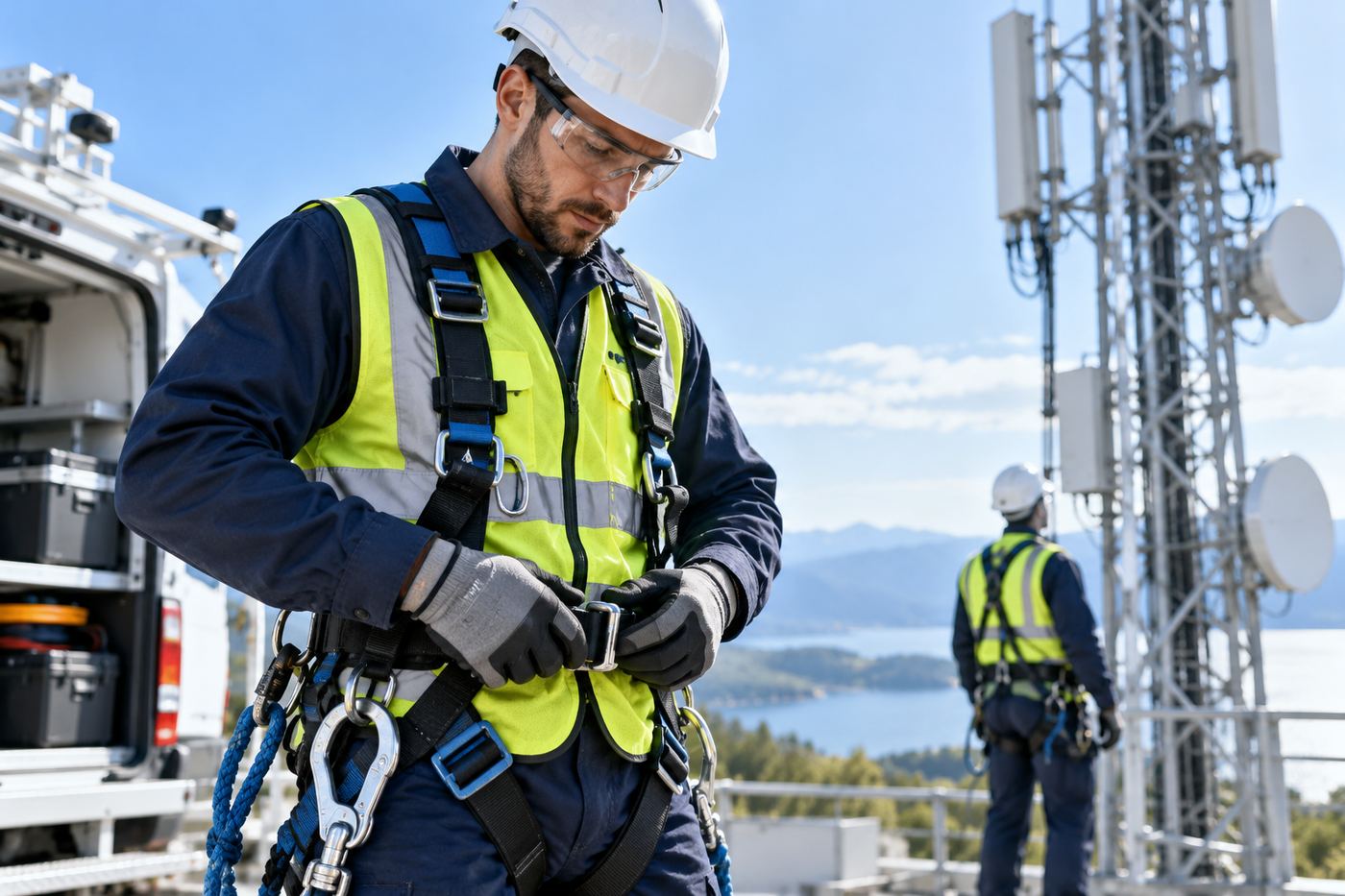
Safety
The rules we do not bend
Telecom construction hurts people in predictable ways: excavation without locates, aerial work without fall protection, traffic, and confined spaces. All four are preventable, and all four get skipped under schedule pressure.
- PA One Call / 811 locates placed and verified before any excavation — no exceptions for small jobs
- Fall protection for all aerial and elevated work
- Traffic control appropriate to the right-of-way, quoted as its own line so it never gets cut
- Confined space procedures for vaults and manholes
- Laser safety discipline — fiber is invisible and does not announce itself
- A crew member can stop work over a safety concern without needing to justify it first
Quality
What quality control means here
Quality in this trade is not a slogan — it is a small number of specific habits, repeated when nobody is watching.
Before the work
- A written scope, so "what was agreed" is a document rather than a memory
- A loss budget calculated up front, so the design is provably achievable
- Equipment calibrated and arc-tested — a drifting splicer ruins a whole shift silently
During
- Connector endfaces scoped and cleaned before every mate
- Bend radius and fill ratio respected, including where it is inconvenient
- Every splice OTDR-verified in both directions, not accepted on the splicer's estimate
- Labelling applied as the work happens, not reconstructed afterwards
At closeout
- Bi-directional traces and loss results against the agreed budget
- As-builts that match what is physically there
- Photographs of closures, terminations and pathways
- A punch walk before we invoice, not after you complain
On standards
We build to ANSI/TIA-568 for cabling performance, ANSI/TIA-606 for labelling and administration, ANSI/TIA-942 where data center considerations apply, and NEC requirements for pathways, fire-stopping and abandoned cable. Where your project specification is tighter, your specification governs — tell us at quote stage, because it changes method and time.
We will also tell you plainly when something is outside what we self-perform. A contractor who has never said "that is not us" is a contractor who has not been honest with you yet.
How we work
The habits behind a clean job
 Hard hats & PPE on every job
 Safety before schedule
 Test results delivered
 On-time work windows
 One number to call
 Written daily updates
 Local, Philadelphia-based crews
 Scheduled around you
 Straight answers
 Job-site checklists
 Every end inspected
 Documented closeout

Send us the scope. We will send back a number.
Drawings, a footage count or a rough description — whatever you have. We will tell you what we can self-perform, what it costs and when we can mobilise.