
Energy & utilities
The communications layer on utility infrastructure — fiber for SCADA, protection and monitoring, spliced and certified to the same standard as carrier plant.
The market
Fiber on utility infrastructure
Utilities run some of the most demanding fiber networks there are, because the traffic on them is protection and control rather than video streaming. An out-of-spec splice on a protection circuit is a different category of problem.
What we do here
- Fiber splicing and termination on utility communications plant
- OTDR certification with the documentation retention utilities require
- Substation communications cabling — control house, panels, terminations
- SCADA and monitoring connectivity between sites and control centres
- Route survey and make-ready data for communications builds
- Restoration support on communications fiber after weather or damage
Being clear about scope
We are a communications contractor. We work on the fiber and low-voltage systems that ride on utility infrastructure — not on energized high-voltage conductors, and not on OPGW work that requires specialised transmission crews and outage coordination. Where a scope crosses that line we will say so and coordinate with the crews who hold that qualification rather than stretch ours.
In the field
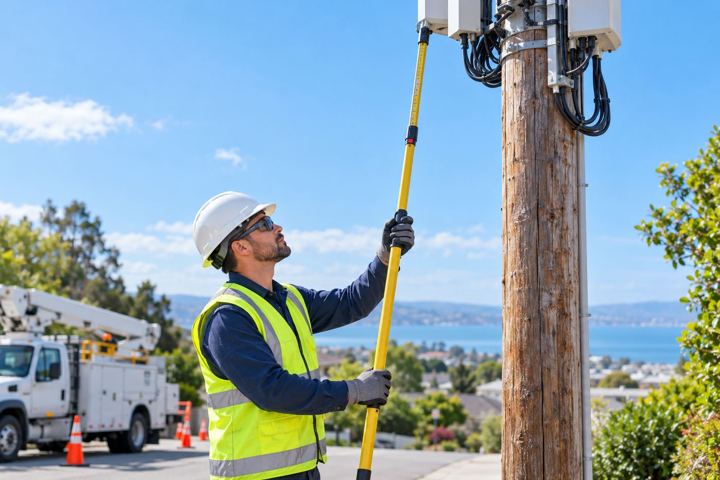
What this work looks like


Frequently asked questions
Do you work on OPGW?
OPGW installation on energized transmission lines requires specialised crews, outage coordination and qualifications we do not claim. We can splice and certify fiber in communications applications, and where a scope requires transmission-qualified crews we will tell you plainly rather than take it on.
Do your technicians have utility site training?
Site-specific safety orientation and access requirements vary by utility. Tell us what yours are at quote stage and we will confirm what our crew holds and what would need arranging before we commit to a schedule.
What documentation do you provide?
Bi-directional OTDR traces, loss results against budget, as-builts and photographs — in the retention format your records group requires. Utilities usually have stricter documentation requirements than commercial customers, and it is worth agreeing the format up front.

Send us the scope. We will send back a number.
Drawings, a footage count or a rough description — whatever you have. We will tell you what we can self-perform, what it costs and when we can mobilise.