
FTTH & residential installation
The drop is the part of the network the customer actually sees. It gets the same care as a backbone splice — and the cable gets routed where a person would want it, not where it is fastest to staple.
Capability
From the tap to the router
We install fiber drops for carriers and ISPs on production work, and directly for homeowners and landlords who want in-home wiring done properly.
- Aerial and buried drops from the tap, pedestal or MDU riser
- NID and demarc placement
- ONT mounting, powering and activation
- In-home fiber and Ethernet — Cat6/Cat6A runs to rooms that need them
- MDU and apartment risers, hallway pathways and unit drops
- Wi-Fi placement — router and access point siting that reflects the building
- Existing coax and phone removal or reuse where appropriate
What "tidy" means
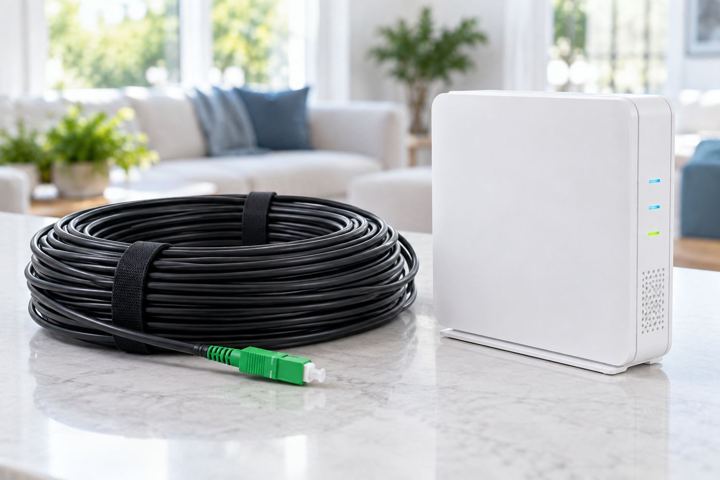
Cable secured at proper intervals, not swagged between two staples. Penetrations sealed. Bend radius respected — a fiber drop kinked behind a baseboard will pass on the day and fail in six months. Nothing drilled without asking. And a clear explanation, in English or Russian, of what was installed and what each box does.

Inside the home
Routed where a person would actually want it
Fastest is not the same as right. Cable gets run along a baseboard or through a wall cavity, not stapled across the middle of a room, and the customer gets a plain explanation of what was installed and why.
In the field
What this work looks like


Frequently asked questions
I am a homeowner — can I hire you directly?
Yes. If your provider has brought fiber to the property but the in-home side is a mess, or you want Ethernet run to specific rooms, that is work we do directly. Note that the drop from the street is usually owned by your ISP and has to come from them.
Do you install for internet providers?
Yes — production FTTH install work on a per-drop basis is a core part of what we do, and our crews are bilingual, which matters in a lot of Philadelphia neighbourhoods.
How long does a typical install take?
A straightforward drop and ONT is usually one to three hours. Buried drops, long runs, MDUs and in-home wiring take longer. We will give you a realistic window rather than an optimistic one.
Can you wire a whole house?
Yes — structured wiring for new construction or retrofit, with a proper central panel rather than a router balanced on a shelf. See structured cabling.

Send us the scope. We will send back a number.
Drawings, a footage count or a rough description — whatever you have. We will tell you what we can self-perform, what it costs and when we can mobilise.