
Broadband & carriers
Production work for ISPs, carriers, municipal and co-op networks — the crews that place the plant, splice it, certify it and come back when it gets cut.
The market
Building out, and keeping it up
Broadband work is production work. The unit cost matters, the completion rate matters, and the thing that quietly destroys a build schedule is rework — drops that fail certification, splices that have to be reopened, addresses that get rescheduled three times.
What we take on
- FTTH production installs priced per drop, with completion rates we hold
- OSP construction — aerial strand and lashing, underground conduit and vaults
- Distribution and backbone splicing, from 12-count to 864
- Tier 1 and Tier 2 certification with documentation in your acceptance format
- Make-ready field data and route survey ahead of the build
- MDU builds — risers, hallway pathways and unit drops
- Emergency restoration on a 24/7 basis once plant is live
Municipal and co-op networks
Publicly funded builds carry documentation requirements that commercial work often does not — reporting formats, milestone evidence, as-builts that have to survive an audit years later. That is a documentation discipline more than a technical one, and it is worth agreeing the format before the first splice rather than reconstructing it at closeout.
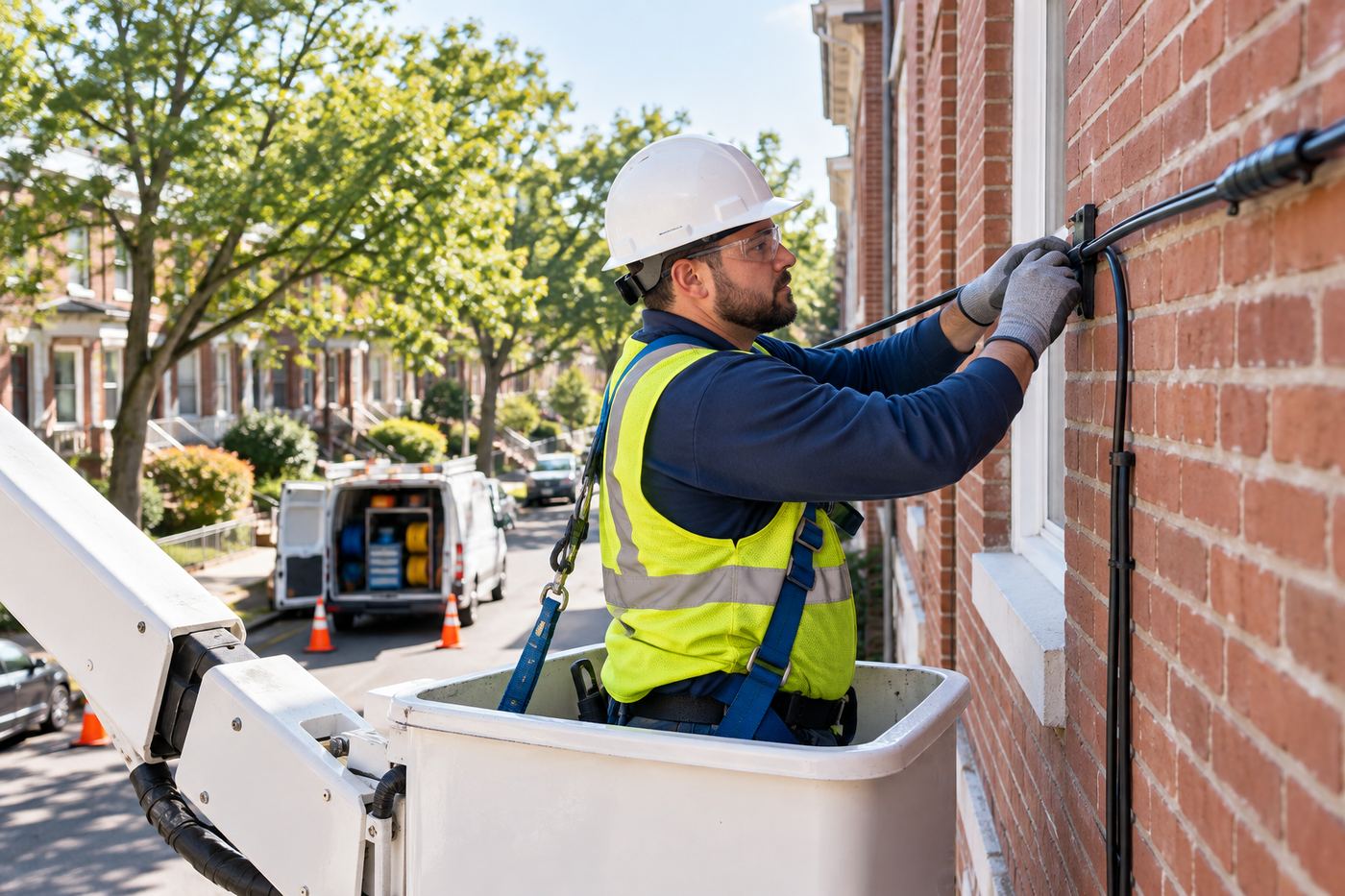
After the build
The network still has to stay up
A build ends; maintenance does not. Once plant is live, cuts, storm damage and vehicle strikes become the work — and the response time is what your subscribers actually experience.
Frequently asked questions
Can you hold a production rate?
We will quote one we can actually hit for your specific conditions — density, drop type, access, permitting. Row-home aerial drops in the Northeast and buried drops in a township with strict restoration rules are very different numbers, and quoting one rate for both helps nobody.
Do you work as a subcontractor to our prime?
Yes, that is most of this work. COI, W-9 and vendor onboarding are routine — see Partners for how we set that up.
Can you handle both the build and the maintenance?
Yes, and there is a real advantage to it: the crew that restores a cut already knows how the plant was built and where the slack is. See emergency restoration.

Send us the scope. We will send back a number.
Drawings, a footage count or a rough description — whatever you have. We will tell you what we can self-perform, what it costs and when we can mobilise.