
Emergency restoration
Cut cables do not respect business hours. When a backhoe finds your fiber at 3 a.m., the only things that matter are how fast somebody is on site and whether they can actually fix it when they get there.
Capability
Dispatched around the clock
Restoration is different work from construction. The scope is unknown, the clock is running, and the decisions that matter are made in the first thirty minutes.
- 24/7 dispatch — nights, weekends and holidays
- Fault location by OTDR, with a distance to the break before the crew is on site
- Temporary restoration to get the circuit up while a permanent fix is arranged
- Permanent repair — new section, closure and full certification
- Storm and vehicle damage — downed strand, snapped poles, pulled drops
- Dig-in response and coordination with the responsible party
- Documentation for insurance and damage recovery claims
What we need from you on the call
Site address and access. Cable type and fiber count if you know it. Which end is still lit. Your as-builts if they exist. Any of it we can work without — but every item you have shortens the outage.
Being honest about response time
Response depends on distance, traffic, weather and whether the site is accessible. We will give you a real ETA on the phone. A contractor who promises a fixed response time regardless of where the fault is has not thought about it, or is not telling you the truth.
Response
What happens after you call
-
Call triage
Cable type, count, which end is lit, site access. We start locating from your end while the crew mobilises.
-
Locate
OTDR gives a distance to the fault. Combined with as-builts that usually places it within a short span.
-
Restore
Temporary splice to bring the circuit back if that is the quickest path to service, then the permanent repair.
-
Certify & document
Bi-directional traces on the repaired section, plus photographs and a report for any damage claim.
On site
Whatever time it is when the call comes in
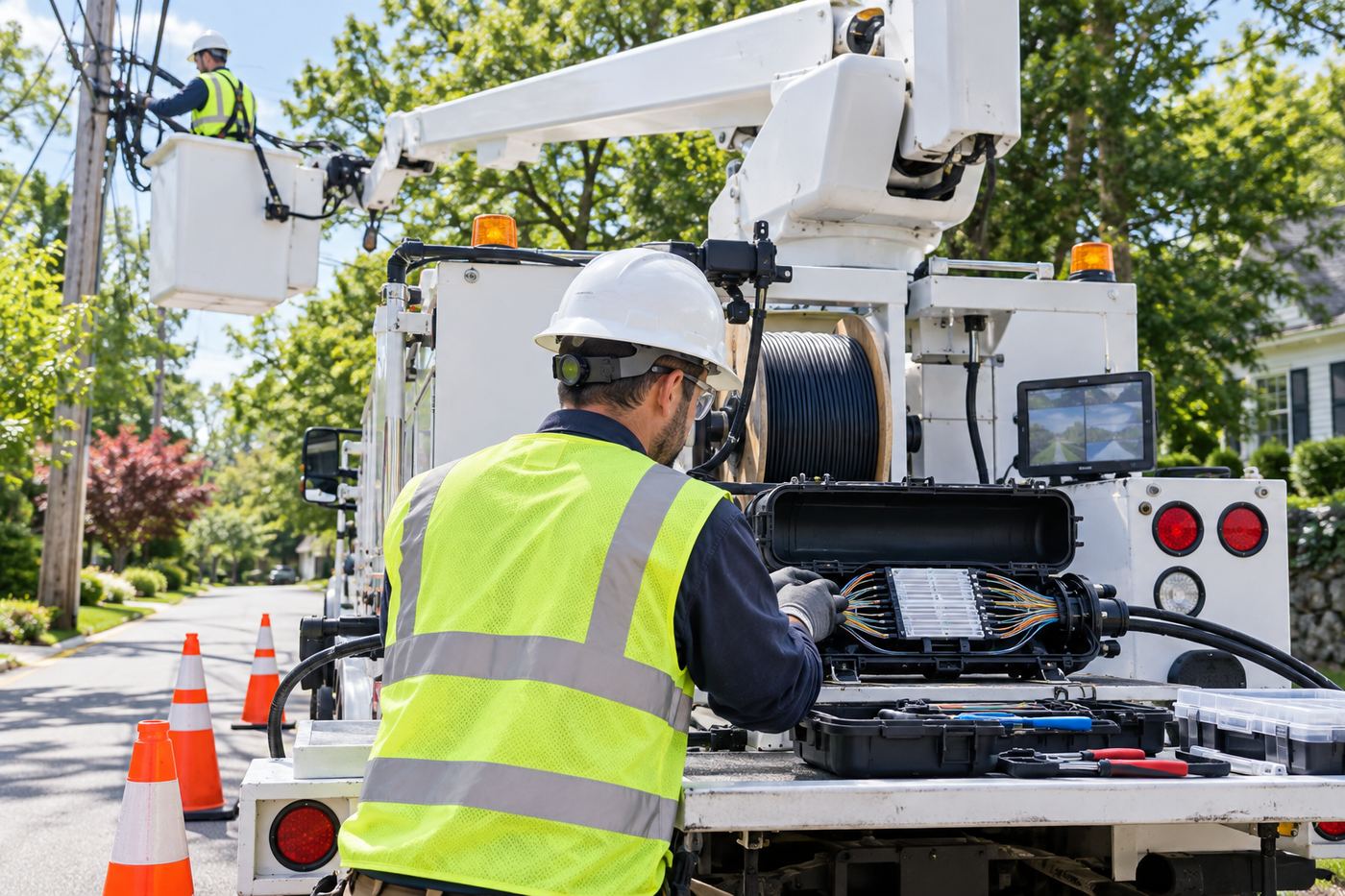
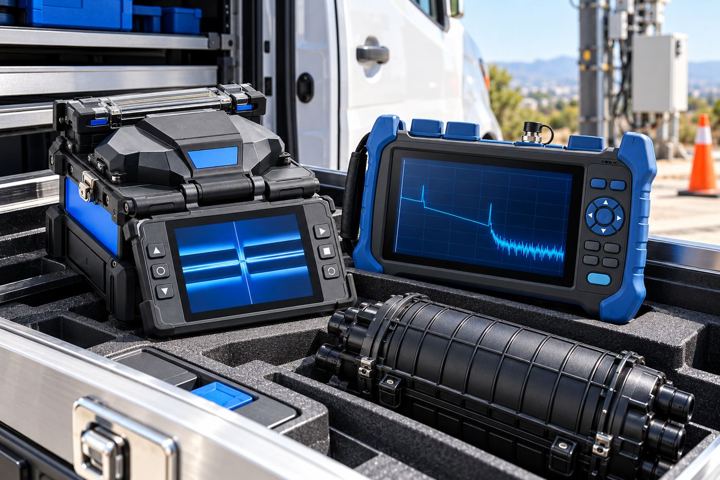
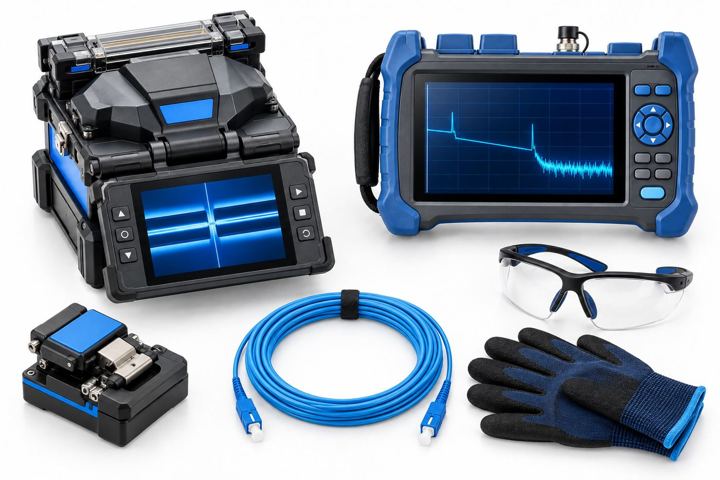
A cut cable at 3 a.m. does not wait for daylight. The crew rolls with a splicer, an OTDR and closures already loaded, and locates the fault before it arrives if the site lets us.
In the field
What this work looks like

Frequently asked questions
How quickly can you get on site?
It depends on where the fault is and what time it is. We give you a genuine ETA on the call. What we will not do is quote a blanket response time that sounds good and then miss it.
Do I need a contract in place first?
No. We take emergency calls from anyone. That said, having your cable records and site access details on file with us in advance measurably shortens the outage, and costs nothing to arrange.
Can you provide documentation for an insurance claim?
Yes — photographs, fault location data, the scope of the repair, materials used and time on site. This comes up constantly with dig-ins and vehicle strikes, and good documentation is usually what decides recovery.
What does emergency work cost?
Restoration is time and materials — nobody can honestly quote a fixed price for an unknown fault. You get crew rates and material costs up front, and a full accounting afterwards.

Send us the scope. We will send back a number.
Drawings, a footage count or a rough description — whatever you have. We will tell you what we can self-perform, what it costs and when we can mobilise.